
Backup Power Planning for Operational Continuity
Generator Installations in Sanford for commercial and industrial properties requiring reliable backup power during outages
Winter storms, equipment failures, and grid disturbances create power outages that halt production, interrupt services, and create operational challenges for businesses and industrial facilities throughout Maine. Properties with refrigeration systems, data infrastructure, manufacturing equipment, or critical operations require backup power planning to maintain function when utility service drops. On-Pointe Electric LLC handles generator installations in Sanford, Kennebunk, Waterboro, and surrounding areas by integrating backup power systems with existing electrical infrastructure to support facility-specific requirements. This service involves electrical planning around your property's power demands, proper connection to distribution systems, and installation work that allows backup power to support important operations when outages occur.
Generator installation requires calculating which loads must remain operational during an outage, determining electrical requirements for those systems, and integrating the generator with your facility's distribution equipment. Electrical work includes installing transfer equipment that safely disconnects utility power and connects the generator without backfeeding the grid, running conductors sized to handle the generator's output, and ensuring grounding and bonding meet installation requirements. In northern New England, outdoor generator installations must also account for cold-weather starting requirements and exposure to snow and ice accumulation.
Schedule a consultation to review your facility's backup power requirements and discuss electrical integration options that match your operational priorities.
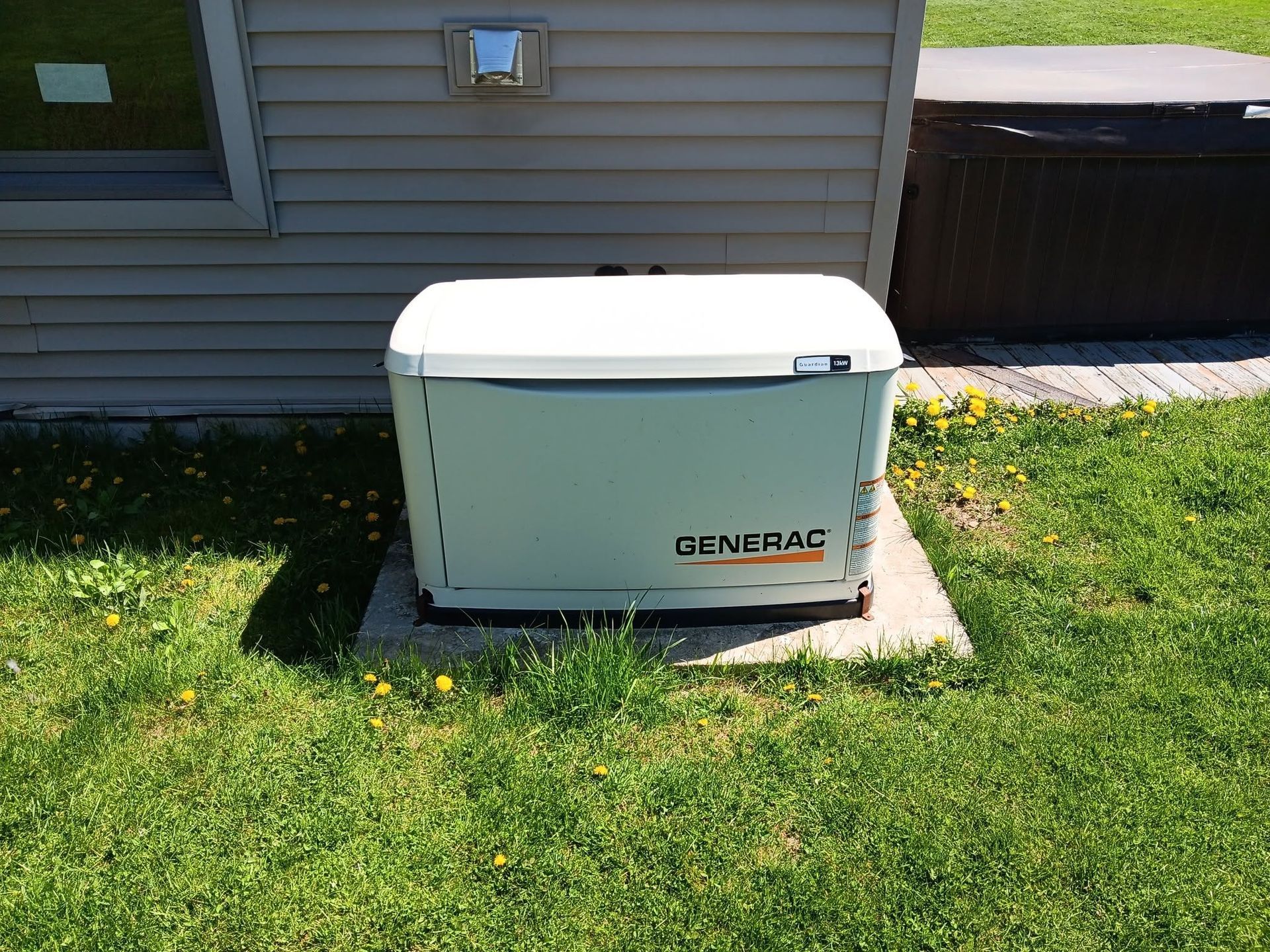
What Proper Installation Requires
Installation planning begins with evaluating which electrical loads must stay online during utility outages and calculating the total power demand those systems represent. The generator must supply adequate capacity for simultaneous operation of selected equipment, accounting for motor starting currents and other surge loads. On-Pointe Electric LLC handles the electrical connections, transfer equipment installation, and integration with your existing distribution system, ensuring the backup power source connects safely and functions as intended when needed.
Once installation is finished, your facility will have backup power capability that activates during outages, maintaining operation of selected systems without requiring manual intervention. You'll notice that critical equipment continues running, temperature-sensitive processes remain stable, and business operations sustain functionality despite utility service interruptions.
Generator installations include electrical integration and connection work. The generator unit itself, fuel supply systems, and ongoing maintenance fall outside the scope of electrical installation services and are handled separately.
What Property Owners Usually Ask
Businesses planning backup power installations typically have questions about electrical requirements, system design, and operational expectations.
What determines which electrical loads can run on backup power?
The generator's capacity limits how many systems can operate simultaneously, so installation planning identifies priority loads, calculates total power demand including motor starting surges, and designs transfer equipment to connect only those circuits the generator can reliably support.
How does backup power connect to existing electrical systems?
Transfer equipment safely disconnects utility service and connects generator output to selected distribution panels or circuits, preventing backfeed into the utility grid while allowing the generator to supply power to predetermined loads during outages.
Why do outages create particular challenges for facilities in Maine?
Prolonged winter outages affect heating systems, frozen product storage, and operations dependent on consistent power, while rural areas may experience longer restoration times, making backup power especially valuable for businesses where downtime creates financial loss or service disruptions.
What electrical work is involved beyond connecting the generator?
Installation includes running appropriately sized conductors from the generator to transfer equipment, integrating transfer switches with distribution panels, ensuring proper grounding and bonding, and verifying that protective devices coordinate correctly between utility and generator power sources.
How soon after installation can the system provide backup power?
Once electrical connections are completed and the system is tested, backup power becomes available immediately when utility service drops, assuming the generator unit itself is fueled and maintained according to manufacturer requirements.
Backup power installations require careful electrical planning around your facility's actual operational demands and realistic expectations about what can run during outages. On-Pointe Electric LLC works with commercial and industrial properties to design and install generator connections that support continuity when utility service fails.